
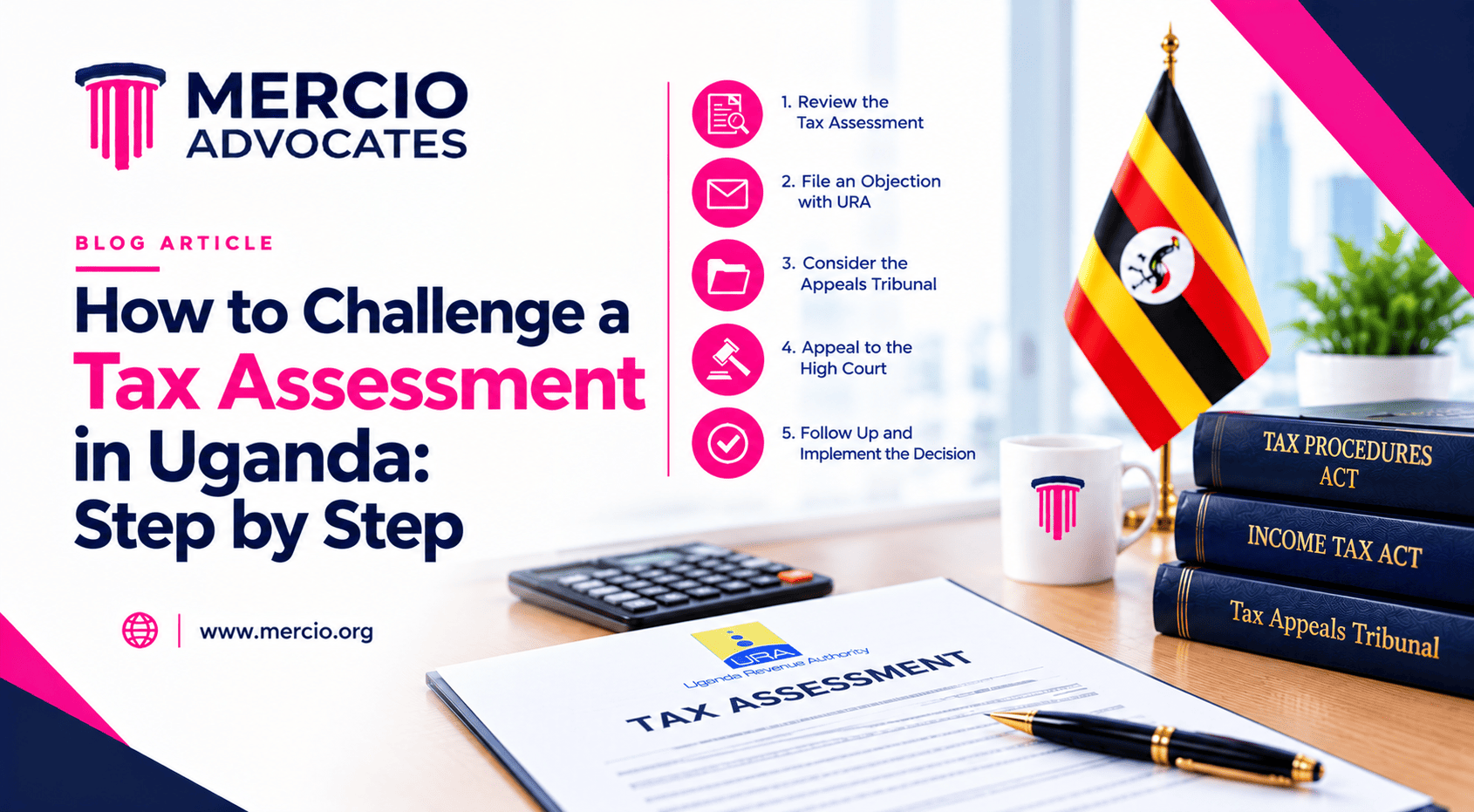
Yes. To challenge a tax assessment in Uganda, a company first lodges a written objection with the Uganda Revenue Authority (URA) within 45 days of receiving the tax decision. URA should decide within 90 days. If the company is still dissatisfied, it can apply to the Tax Appeals Tribunal within 30 days of the objection decision, generally after paying 30% of the tax assessed or the tax not in dispute, whichever is higher.
The deadlines are short and the procedure is technical, so the way you prepare your objection often decides the outcome. This guide walks through each stage and the practical points businesses should know.
When can you challenge a tax assessment in Uganda?
The objection and appeal process under the Tax Procedures Code Act applies to "tax decisions", which include assessments issued by URA. Common situations include:
- an additional assessment after a URA audit or desk review;
- a default or estimated assessment where URA believes a return was not filed or was incomplete;
- disallowed expenses, input VAT claims or capital allowances;
- disputes over whether income or a transaction is taxable at all;
- penalties and interest that you believe were wrongly imposed.
The burden is on the taxpayer to show that the assessment is wrong or that a different decision should have been made. Evidence therefore matters from the very first step.
Step-by-step: objecting to and appealing an assessment
- Read the assessment and note the date you received it. The 45-day objection period runs from receipt of the notice of the tax decision.
- Gather your evidence. Collect books of account, invoices, contracts, bank statements, returns and correspondence with URA. Reconcile the figures before you write the objection.
- Lodge a written objection with URA. Use the prescribed form, state the grounds of objection precisely and attach supporting evidence. If you need more time, apply in writing for an extension and give your reasons; URA may grant it but is not obliged to.
- Engage with URA's review. URA may ask for documents or meetings. Respond promptly and keep a written record of everything you submit.
- Receive the objection decision. URA should serve its decision within 90 days of receiving the objection. The decision may confirm, reduce, increase or otherwise change the assessment.
- If URA does not decide in time, consider the election. Where no decision is served within 90 days, the taxpayer may give written notice electing to treat the objection as allowed. This rule does not apply where URA has notified you that it is reviewing your records for the objection.
- Apply to the Tax Appeals Tribunal. If you disagree with the objection decision, apply to the Tribunal within 30 days of being served with it.
- Further appeals on points of law. A party dissatisfied with the Tribunal's decision may appeal to the High Court within 30 days, but only on questions of law, and from there to the Court of Appeal.
These steps follow URA's published guidance on objections and appeals. Confirm the current rules and forms before you file, because procedures are amended from time to time.
The 45-day objection: getting it right
An objection is not a formality. It sets out the case you will rely on later, so treat it as a legal document:
- Be specific. Identify each item in the assessment you dispute and explain why, with figures.
- Cite the law. Refer to the relevant provisions of the Income Tax Act, VAT Act or other tax law where the dispute turns on interpretation.
- Attach evidence. Unsupported statements carry little weight.
- Check the preconditions. URA's guidance states that an objection is considered where the relevant return has been filed and the tax due has been paid, so check whether any undisputed amount must be settled first.
- Keep proof of filing. The date URA receives the objection starts the 90-day clock.
The 90-day rule
The 90-day period for URA's decision is a real protection for taxpayers. In a 2026 decision reported by the Daily Monitor and summarised by PwC, the Tax Appeals Tribunal held that the period runs from the date URA receives the objection, and that a taxpayer's election to treat the objection as allowed took effect once validly lodged after the deadline had passed. Requests for documents or meetings do not automatically extend the period, but a notified review of records can. If you think URA has missed the deadline, take advice before you elect, because the timing and form of the election matter.
Appealing to the Tax Appeals Tribunal and the 30% rule
The Tax Appeals Tribunal is a specialised body that reviews URA's decisions. Under the Tax Appeals Tribunal Act, a taxpayer who applies to the Tribunal must generally pay 30% of the tax assessed or the tax not in dispute, whichever is higher, before the case is heard. This "pay now, argue later" rule has been tested in the courts several times, including on whether security or property already seized by URA can count towards the payment and on disputes that turn on points of law. The position continues to develop, so take advice on how the rule applies to your case before the 30-day deadline.
Alternative dispute resolution
After an objection decision, a taxpayer may also ask URA to resolve the dispute through alternative dispute resolution (ADR), such as structured negotiation. ADR can save time and cost where the dispute turns on facts and figures. Keep the appeal deadlines in mind while ADR is under way, and agree in writing how they are treated.
Mistakes that weaken a tax dispute
- Missing the 45-day or 30-day deadlines.
- Filing a general objection without specific grounds or evidence.
- Ignoring URA's requests for information during the review.
- Not budgeting for the 30% payment needed to go to the Tribunal.
- Poor record keeping in the first place. Good records are the best defence; see our overview of business taxes in Uganda for the main obligations.
How Mercio Advocates can help
Taxation and dispute resolution are part of our business law services. We review assessments, prepare objections with the supporting evidence, engage with URA, advise on ADR and represent businesses before the Tax Appeals Tribunal and the courts. We can also review your records and filing positions before a URA audit, so that potential issues are identified and documented before an assessment is issued. If you have received an assessment, contact us early so the deadlines do not run out: call +256 785 390 207, email info@mercio.org or book an appointment.
This article provides general information about tax law in Uganda and is not legal advice. Time limits and procedures change and depend on the facts of each case, so confirm them with URA or our office. For advice on your situation, please contact Mercio Advocates.